
Breaking Waves on the Surface of the Heartbeat Star MACHO 80.7443.1718
Video, 2024, 10min 10s (exerpt 1min 55s)
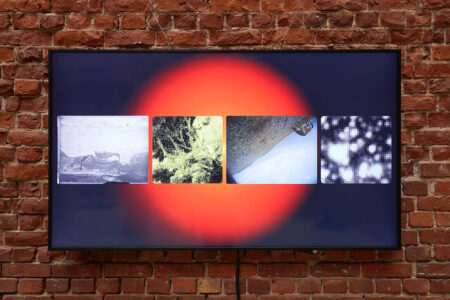
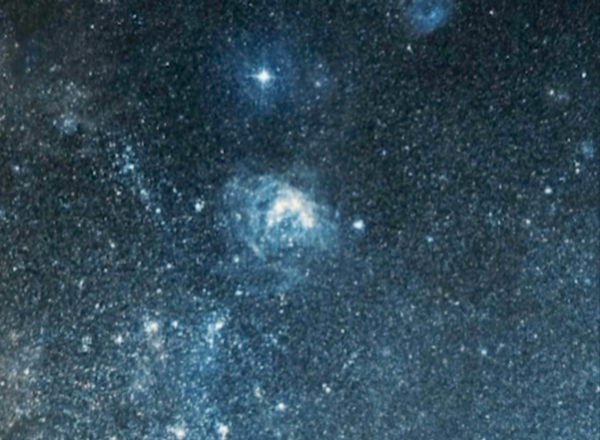
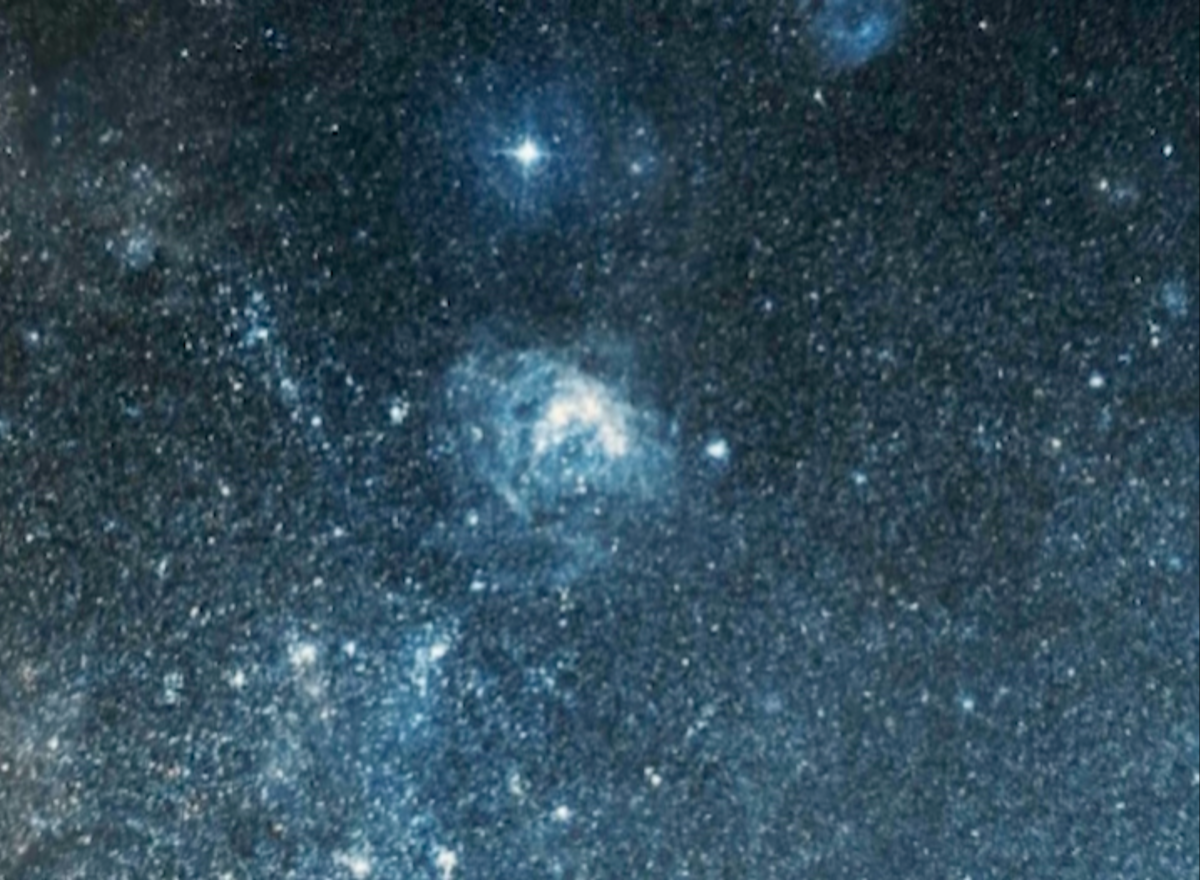
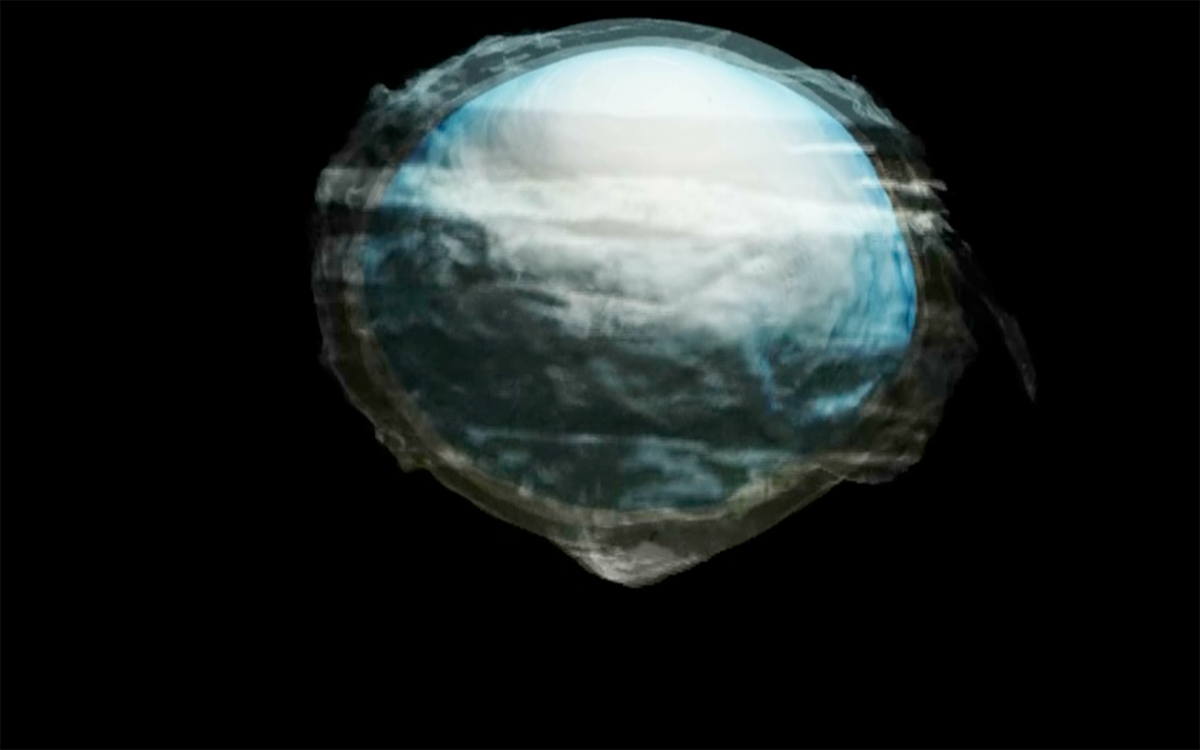
With MACHO 80.7443.1718, the most extreme example of heartbeat stars to date was classified in 2023. These stars are a binary system of stars orbiting each other in an elliptical manner. Each monthly orbit causes periodic fluctuations in the brightness recorded by telescopes, so that the resulting light curves are similar in their form to the rhythms of the heartbeat on an EKG machine. The gravity of binary stars creates enormous waves of gas as they approach. The waves generated at MACHO 80.7443.1718 are three times the size of our sun and thus move on an almost unimaginable scale. The larger star in this dyad is nearly thirty-five times the mass of the Sun. Powerful telescopes make it possible to perceive a reality that would otherwise not be there for us. Since practical experimental arrangements in astrophysics would go beyond the physical scope due to the dimensions of the phenomena examined, computer simulations are used for such investigations, which are intended to provide information about the processes in the vastness of space. The universe is constantly changing. This also applies to our own planet, which is estimated to be swallowed up by the expanding sun in five billion years. Astrophysicists have recently been able to observe a similar process in the constellation Aquila using infrared telescopes. The heartbeat stars are also expected to melt together from a pair to form a single star. Tonal translations of Kepler light curves into sound result in different stellar “heartbeats” and form the sonic foundation of the video work. This is repeatedly interrupted by bits and pieces from all-too-familiar pop culture songs that are anchored somewhere in the unconscious, or other collected voice fragments. Excerpts from a lecture by the astrophysicist Dr. Morgan Mac Leod narratively accompany the experimental video work.
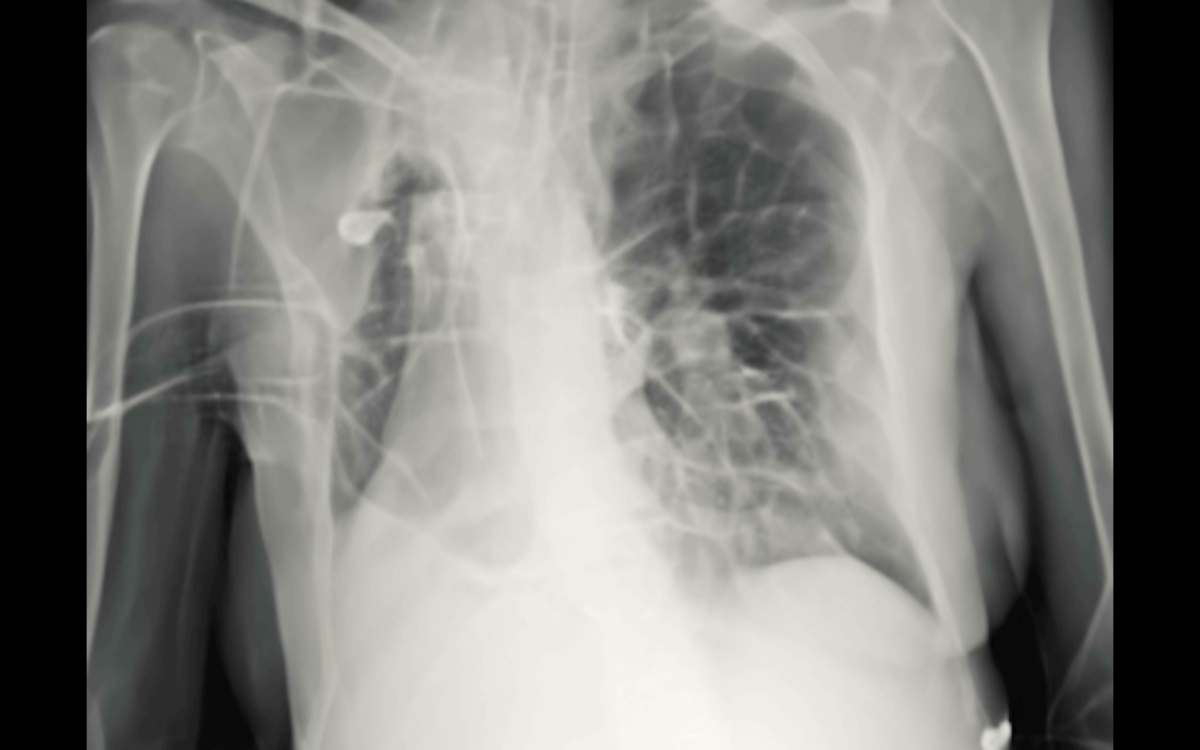
From the macroscopic excursion into the outermost and abstract, it goes back to the microcosm of what is innermost within us: our heart. Artificial intelligence has an important application in cardiovascular medicine. An AI trained for this purpose generates artificial X-ray images of people and thus depicts a whole range of different diseases, organ shapes and sizes. In order to deliver equally valid and reliable results for all ethnicities and genders, artificial intelligence must be constantly trained with data sets and then checked accordingly. For medical treatments, these processes represent an almost magical advance: they not only make the hidden interior of the living body visible, but rather the organs can be viewed in their entirety without having to be removed from the body. At the threshold of the widespread use of AI, the question is not just about an expanded perception of our senses, as is the case with the telescope. Rather, we are actually expanding our awareness of what brings new opportunities and risks and is ushering in a new era at top speed.
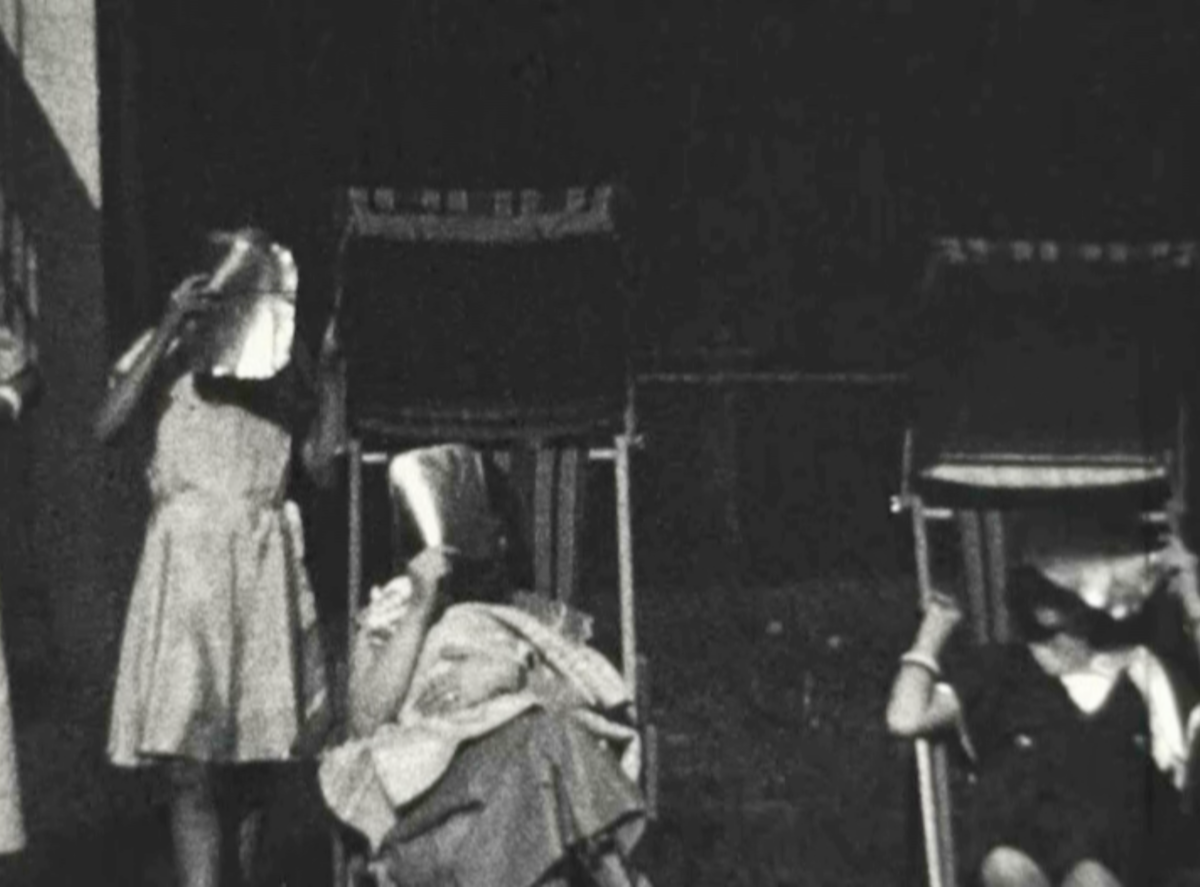
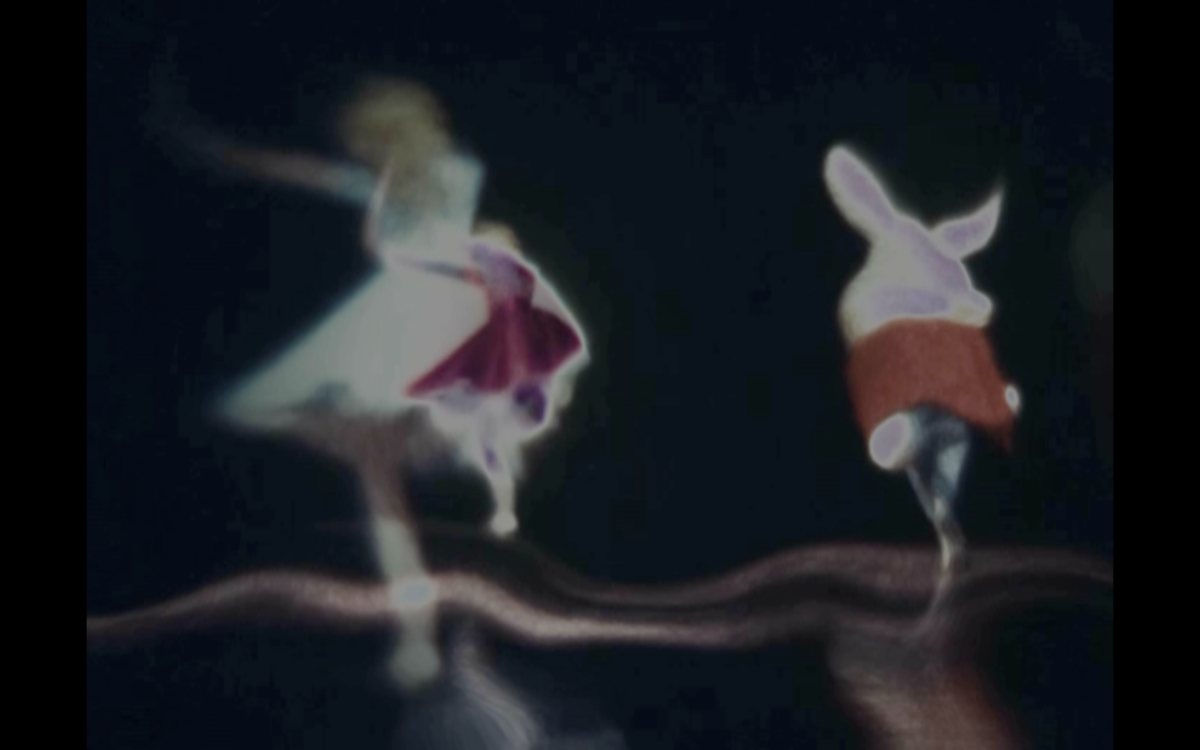
The Super-8 films from unknown sources collected and digitized from different time periods and regions form an aesthetic contrast. The analogue and privately produced short films, a few minutes long, seem almost innocent. They were created in the initial phase of the establishment of amateur film recordings. The specific quality of the film material makes it clear how much our visually conditioned sense of time is tied to certain appearances and camera techniques. The recordings are a testament to the fascination with time captured on celluloid – not least because of its material transience and the associated risk of disappearance of the fragile documents, they were digitized and transferred to the post-analog age. Photographs of the Wells Cathedral astronomical clock, a historical document of the once dominant geocentric idea of order in the universe, confront scientific errors. The question arises as to what allodoxies we will have to admit to ourselves in the future and how our contemporary worldview will be turned upside down.
Go ask Alice, I think she’ll know.
Computational Star Simulations and Voice (pH lecture): Dr.Morgan Mac Leod, Astrophysicist, Harvard-Smithonian Center for Astrophysics Telescope Images (Star swallowing a Planet): Dr.Kishalay De, Dr. Morgan Mac Leod, Astrophysicists, Harvard-Smithonian Center for Astrophysics AI based Cardiac CT Images and X-Rays: Jun.Prof.Dr.Sandy Engelhardt, Group Artificial Intelligence in Cardiovascular Medicine, Heidelberg University Hospital Home Movies: Unknown Sonification of Heart Beat Stars: Dr. Matt Russo, Astrophysicist, Musican, University of Toronto
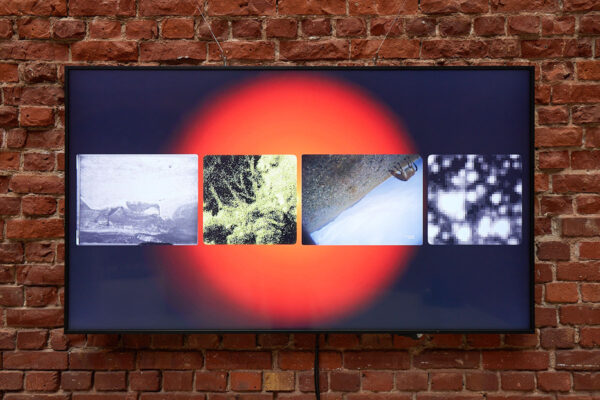
AD INFINITUM
Video, 20min, 2024 (exerpt 2min)
AD INFINITUM shows scientific images like a collection of evidence, brings them out from the hidden realm and opens up new connections by combining the material. The focus is on film as a time-based medium with the potential to represent processualities and as a means of expanded perceptions.
Recordings from a camera collar taken at regular intervals over a longer period of time provide insight into intimate scenes from the life of a wild horse in the Gobi, comparable to a visual diary. Soon after the “discovery” of this species, which was considered a scientific sensation, the animals were in acute danger of extinction in the middle of the last century. With just a few specimens, after various successes and setbacks, it was possible to restabilize the population in human care. Since the 1990s, there have been research-supported release programs to reintroduce horses to the steppe as their original habitat. Thousands of years before these ancient wild horses were a source of inspiration for Paleolithic rock paintings and are immortalized in countless cave works of art. The prominent Lascaux Cave in France was discovered by accident in 1940. The following month, the first photographic documentation was made in black and white by Fernand Windels. Referred to as the “Sistine Chapel” of cave art, the time capsule was a magnet for countless visitors, but the air they breathed soon caused damage to the paintings, which were around 17,000 years old. Due to the destabilized climatic balance, algae, fungi and bacteria spread on the frescoes and put them in danger. Since the 1960s, only restorers and scientists have been able to enter the original cave under strict conditions. The electron microscopic and X-ray spectroscopic images in the video installation come from the context of an investigation into the microbial ecology of the cave. Views of alien-looking micro-landscapes form a bridge from the Stone Age to modern imaging techniques. Changes take place continuously at various levels and can be measured in detail through recording and documentation. In May of this year, astrophysicists published their discovery of how a dying and expanding star (ZTF SLRN-2020) swallowed a planet. The process itself was not new and had been theorized before. However, such an event was confirmed for the first time through observation “in the act” using various telescopes in the optical and infrared range. Light fluctuations at the pixel level allowed this interpretation as a result. This process was calculated using computer simulations and analyzed as an example. According to current research, this will be the fate of the Earth five billion years from now, when it will be devoured by the doomed sun in a final flash of light. Everything that begins seems to have to end at some point – although cosmic time scales are elusive.
A slowed down version of Donna Summer’s ecstatic 70’s disco hit I Feel Love accompanies the video installation like a technoid lament. The repetitive, loop-like beat and the exclusive use of synthesizers made the piece a pioneer for danceable techno rhythms. It was the last song on the record I Remember Yesterday, on which each track represented a different decade and this one pointed to the future.
The rapid development of technologies on different levels that make the unobservable observable leads us to expect numerous expansions of our worldview that will reconstitute our perception of reality and reflect ideas of transience and eternity in a wider spectrum.
Horse Footage: International Takhi Group/Great Gobi B SPA and Dr. Petra Kaczensky (Forestry and Wildlife Management), Inland Norway University of Applied Sciences (INN) Lascaux Footage: Dr. Pedro M. Martin-Sanchez (Environmental Microbiology and Cultural Heritage) and Dr. Ana Z. Miller (Geomicrobiology and Biogeochemistry), Institute of Natural Resources and Agrobiology of Seville (IRNAS); Fernand Windels / Ministère de la Culture (France), Heritage and photography media library (MPP) Space Footage: Dr. Morgan McLeod and Dr. Kishalay De (Astrophysicists), Harvard-Smithonian Center for Astrophysics (CfA) Star-Planet Simulation: Dr. Mike Lau (Astrophysicist), Heidelberg Institute for Theoretical Studies (HITS)


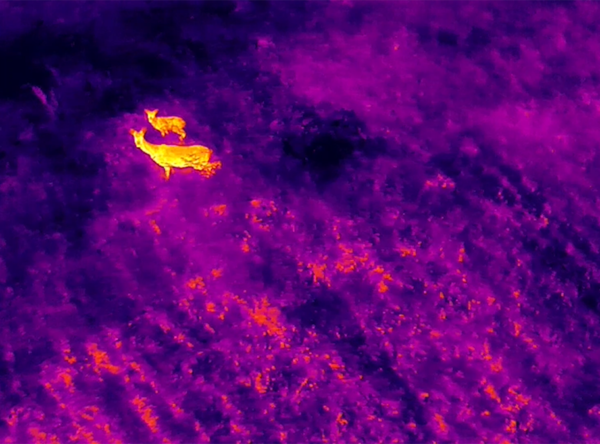
Big Mother
Video, 5min 25s, 2023 (excerpt 45s)
Footage: Rhein-Main-Drone, Rettungshundestaffel Barnim
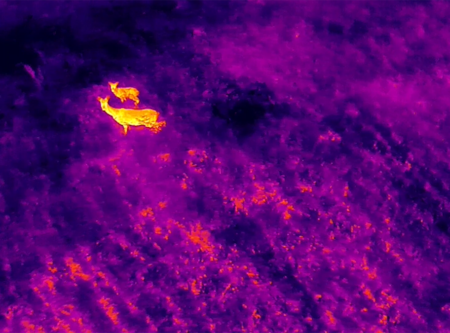
Every spring, countless fawns die a cruel death during mowing due to intensive agriculture. This happens because, in the first few weeks of life, they instinctively crouch when faced with danger instead of fleeing. Hidden in the grass, the animals are nearly invisible. Teams of fawn rescuers have formed with the aim of preventing this disaster. At night, they comb the meadows using drones equipped with thermal imaging cameras to locate the animals and bring them to the safe edge of the field until the danger has passed.
Big Mother examines the relationship between humans and their environment, and how technology can bridge different species.
The experimental video is created from thermal imaging drone footage and developed through a field visit to a fawn rescue operation, engaging in the process as a form of artistic field research.


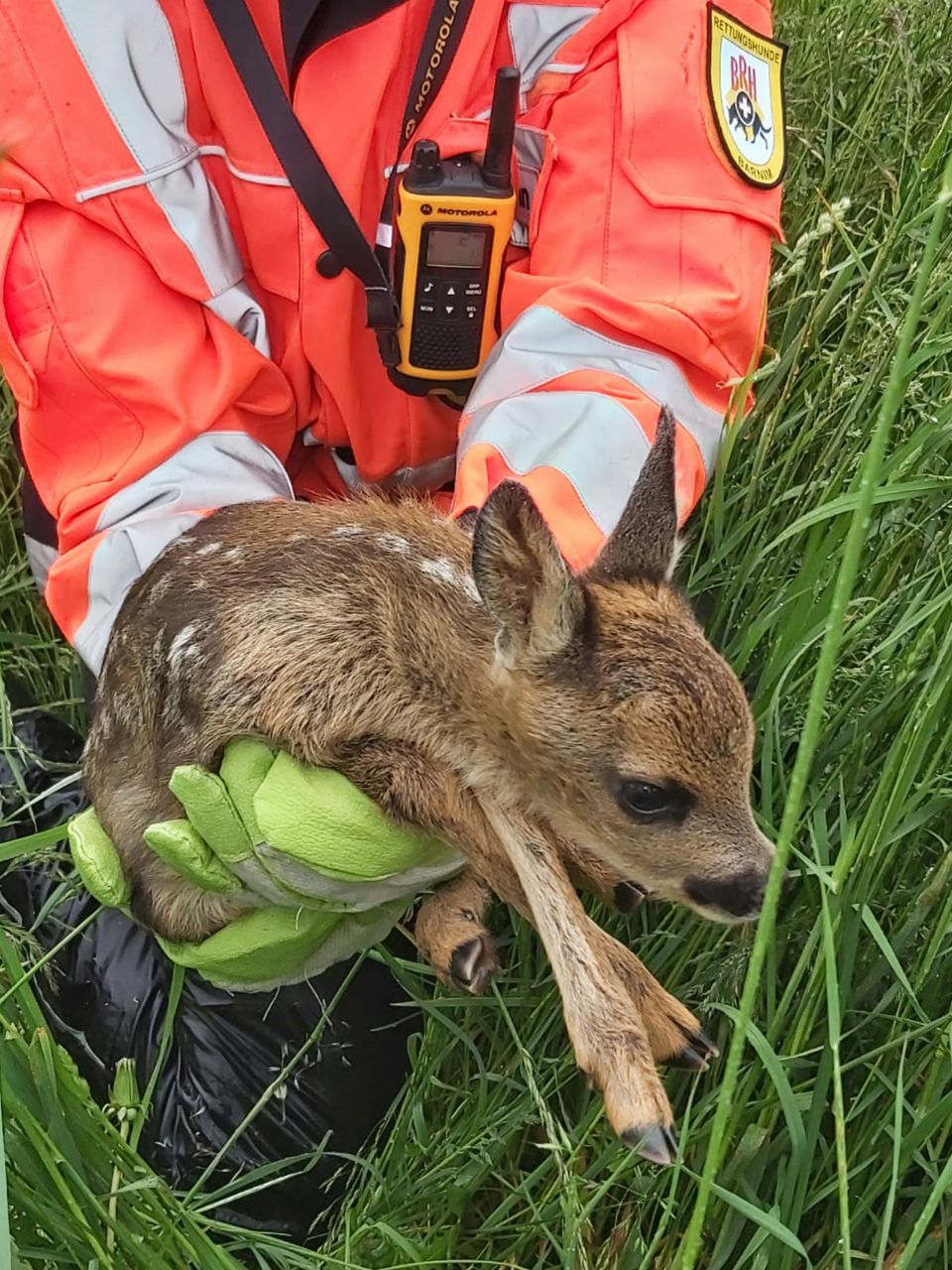


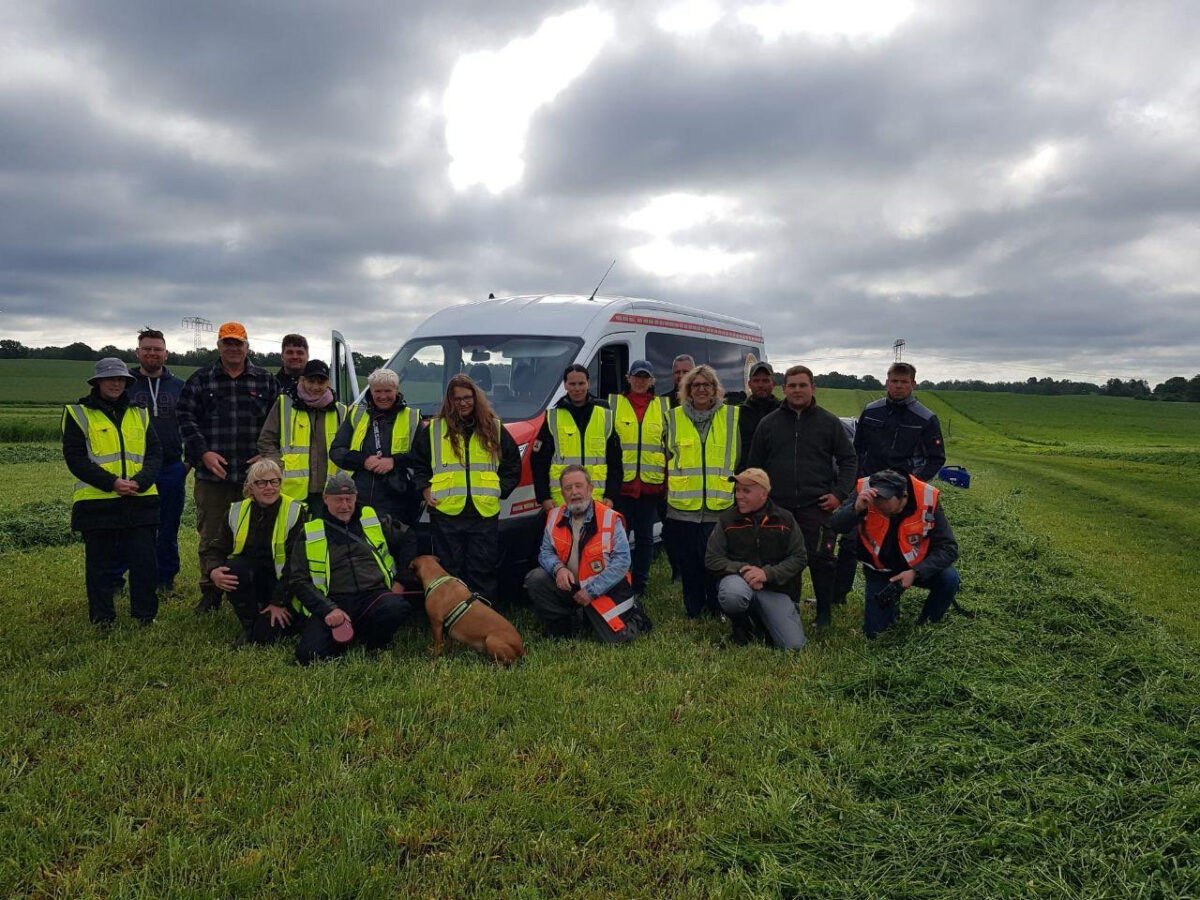
Rescuing fawns with Rettungshundestaffel Barnim in Uckermark (Photos Rettungshundestaffel Barnim)